Website for Massage Therapists: Booking, Intake Forms and Reminders That Fill Your Table
What a massage therapist's website needs: a clear treatment menu, online booking with deposits, intake forms, reminders and local SEO that brings clients in.
 By Bo
4 min read

Your hands are booked, but your phone keeps buzzing between sessions: “Do you do deep tissue?”, “Have you got anything Saturday?”, “How much is an hour?”. A good website answers all of that before anyone messages you, and fills gaps in your diary while you work. Here is what a massage therapist’s website needs to do.
Why a website still matters when you have Instagram
Social media is great for being seen. But when someone is ready to book, they search: “massage near me”, “sports massage” plus their town, “prenatal massage”. They want prices, availability and a reason to trust you, and they want it in one place. Your website is that place, and unlike a social profile, you own it.
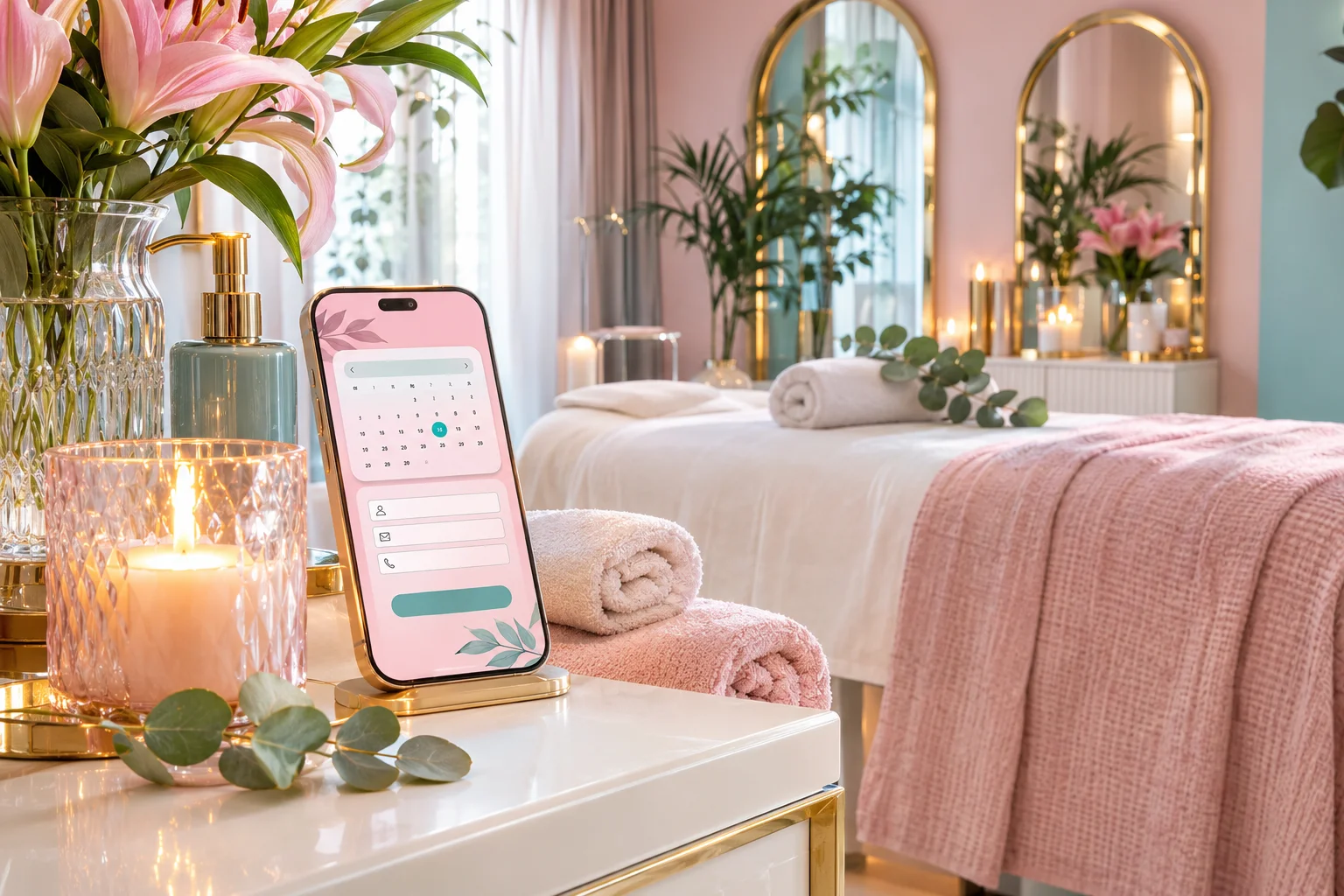
7 things that turn visitors into bookings
A clear treatment menu with prices
List each treatment with its length, price and who it suits: “Deep tissue, 60 or 90 minutes, for stubborn tension and active people”. Hidden prices make people hesitate, and hesitation means they book somewhere else.
Online booking that shows real availability
The single biggest upgrade for most therapists. Clients pick a treatment, see your real free slots and book without a back-and-forth. Set buffer time between sessions for laundry, notes and a breather.
Deposits and a kind, clear cancellation policy
No-shows cost you a paid hour you can’t sell again. A small deposit at booking, plus a friendly policy written in plain words, cuts no-shows without making you sound strict.
Intake forms before the first visit
Instead of a clipboard in the treatment room, new clients fill in a short online form when they book: what they want help with, areas to avoid, pressure preference, and any health information you need to work safely. You start the session prepared, and the client feels looked after.
Automatic reminders and rebooking messages
A confirmation straight away, a reminder the day before, and a gentle “time for your next session?” message a few weeks later. These run on their own once set up, and the rebooking message alone often brings back clients who simply forgot. (This is what workflow automation is made for.)
Trust signals: you, your space, your training
Massage is personal, so people want to know who will be treating them. Add a warm photo of you, a few photos of your treatment room, your qualifications and memberships, and real reviews from clients (with their permission).
Local SEO so nearby clients find you
Mention your town or neighbourhood naturally on your pages, set up and complete your Google Business profile, and ask happy clients for reviews there. Give each main treatment its own section or page so it can show up for searches like “sports massage” plus your area.
Quick check: is your site doing its job?
- Can a new visitor see your prices within ten seconds on their phone?
- Can they book a slot without messaging you?
- Do new clients complete an intake form before arriving?
- Do reminders go out without you sending them?
- Does your Google profile link to your booking page?
If you ticked fewer than three, your site is probably costing you bookings. These 5 signs your website is losing you clients go deeper, and the 50-millisecond verdict explains why first impressions matter so much.
Nice extras once the basics work
- Gift vouchers that people can buy online, which is especially useful before holidays.
- Packages and memberships, such as a monthly massage or a block of five sessions, to smooth out your income.
- An AI assistant trained on your FAQs to answer “What should I wear?” or “Is there parking?” at any hour. See AI assistants.
- Aftercare pages with stretches or tips you already give clients, which also help you show up in search.
Questions
Do massage therapists really need a website?
If you want new clients beyond word of mouth, yes. A website gives searchers your prices, availability and booking in one place, and it is the place your Google profile and social posts should point to.
Should I show my prices online?
In most cases, yes. Clear prices reduce back-and-forth messages and help the right clients book with confidence.
Should I take deposits for massage bookings?
A small deposit or card on file is a common way to reduce no-shows. Pair it with a clear, friendly cancellation policy shown at booking.
How much does a massage therapist website cost?
It depends on what it needs to do. See my guide to small business website costs for typical ranges, or my fixed web design packages.
This article is general guidance about websites and booking for massage businesses. It is not legal or medical advice. Check professional and privacy requirements where you practise.
Work with Bea: Soft, fast WordPress sites with a shop, blog or both. See web design →
Written by Bo
Web designer, automation and AI consultant, and the person behind Bea Elea.
Keep reading

Website for Hair Salons: Online Booking, Deposits and Rebooking That Fill Your Column

Website for Yoga Teachers: Class Schedules, Class Packs and Memberships in One Place

How Much Does a Small Business Website Cost in 2027? An Honest Breakdown
A little Sunday letter
One calm email a week: new posts, a recipe, and what I'm building.
✦ Let’s talk
Join the conversation
I read every comment. Share your thoughts, your experience or a question — kindness always welcome.
No comments yet. Be the first to share your thoughts ♡